
The British siege truly began on March 29, 1780


On March 29, 1780, the British siege of Charlestown truly began. Troops had been massing west of the Ashley River for more than a month, moving along the Wando River and seizing settlements and plantations. Under the cover of fog, General Henry Clinton and his troops crossed the river that March morning; once they landed on the Charleston neck, Americans abandoned their position and retreated south to the city, behind tabby horn works and water moats constructed for defense. The British threat was not just on land; on March 20, the Royal Navy, advancing from the sea, appeared so overpowering that Commodore Abraham Whipple realized resistance was futile and scuttled his half-dozen ships at the mouth of the harbor.
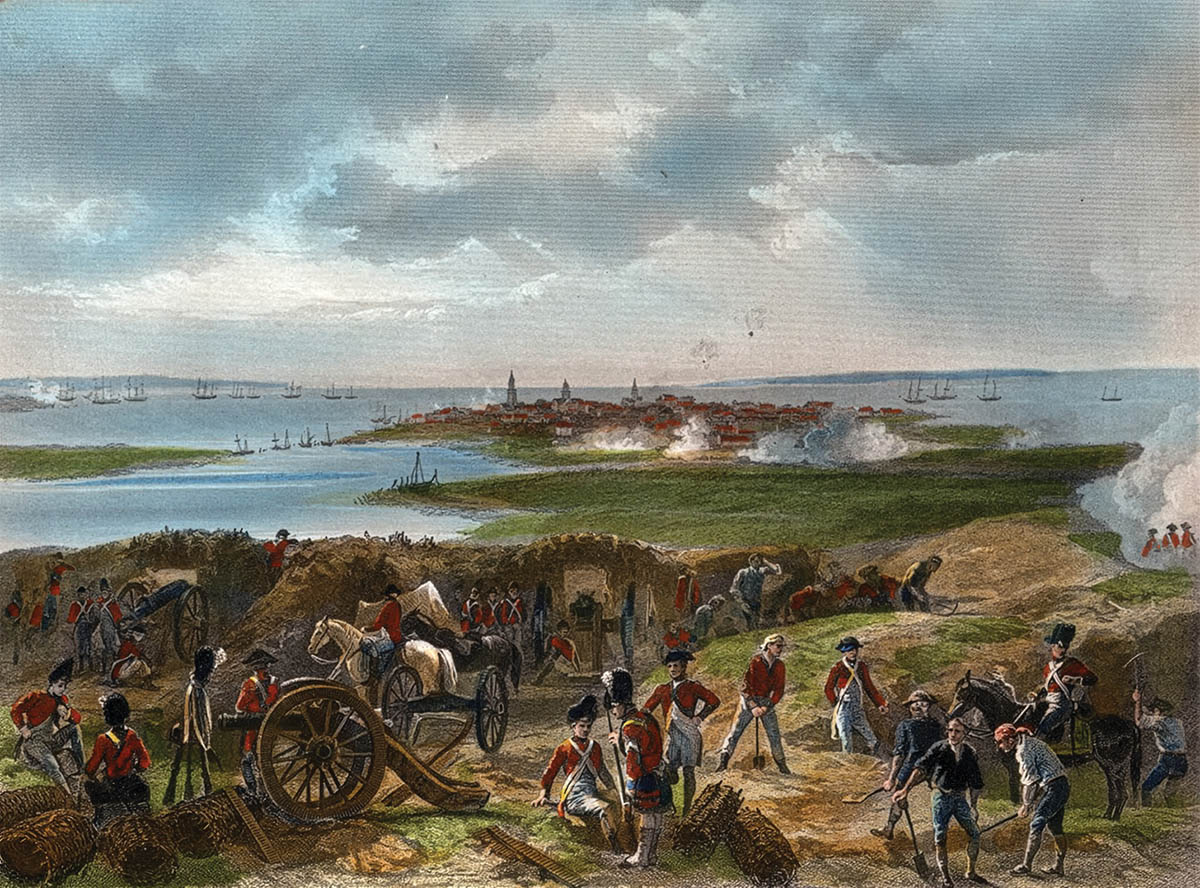
Over the next weeks, the vise tightened as roughly 13,000 British troops threw all their might against the 6,600 or so soldiers, sailors, and militia under the command of Major General Benjamin Lincoln. Moncks Corner fell, cutting off communication and escape in that direction, and the east side of the city came under attack by ships running past Fort Moultrie, as well as by one warship the British had astonishingly hauled overland from the Ashley to the Cooper. Shells fell into the city, fires broke out, and the British managed to drain some of the water from the American moats.
On May 12, Lincoln surrendered the city. An estimated 90 Americans were killed, 138 wounded, and as many as 5,000 captured, while the British sustained 76 killed and 189 wounded. A plaque recently erected by the Preservation Society of Charleston at the intersection of 10th Avenue and Gordon Street in Wagener Terrace commemorates the spot where most British troops and supplies landed on the peninsula; and a bit of the surviving horn work and other signage in Marion Square remind us of the city’s gallant defense.